
Why Study at RMIT University?
If you’re thinking about studying abroad in Australia, RMIT University deserves a close look—especially if you’re passionate about technology, design, business, or innovation. Based in the heart of Melbourne, RMIT blends world-class academics with industry-driven learning, making it a standout choice for international students.
Here’s everything you need to know about studying at RMIT, from courses and fees to campus life and future career paths.
Introduction: What Makes RMIT University Special
RMIT doesn’t feel like a typical university—and that’s part of its appeal. Instead of just lectures and exams, you’ll find hands-on labs, real industry projects, internships, and opportunities to work with globally recognized organizations.
Many international students choose RMIT because it bridges the gap between education and employment. Whether your passion is game design or data analytics, RMIT equips you with skills employers actually value.
About RMIT University
History & Vision
Founded in 1887 as a technical institute, RMIT has grown into a global university with campuses in Melbourne, Vietnam, and Singapore. Today, RMIT focuses on two core ideas:
- Industry relevance—courses built with employer needs in mind
- Innovation and creativity—learning that prepares you for the future of work
It’s this practical, forward-thinking approach that makes RMIT stand out from other Australian universities.
Global Rankings & Reputation
RMIT consistently ranks among the top universities worldwide for both academic quality and graduate outcomes. Many of its programs—particularly in engineering, design, and technology—feature in global subject rankings.
These rankings matter because they reflect international recognition and credibility, which can boost your resume when applying for jobs overseas.
Courses & Academic Strengths
One of the biggest strengths of RMIT University is its diverse course offerings—from business and IT to design and health sciences.
Undergraduate Programs
RMIT’s undergraduate degrees are practical, industry-aligned, and designed to prepare you for job success. Popular options include:
- Bachelor of Information Technology
- Bachelor of Business (Marketing, Finance, Management)
- Bachelor of Engineering (Electrical, Mechanical, Software)
- Bachelor of Design (Graphic, Industrial, Fashion)
- Bachelor of Communication
What sets RMIT apart is that many programs include real-world projects, internships, and collaborations with industry partners.
Postgraduate & Research Programs
For students pursuing advanced study, RMIT offers master’s and research programs in areas like:
- MBA (Master of Business Administration)
- Cyber Security
- Data Analytics & Artificial Intelligence
- Public Health & Health Sciences
- Advanced Engineering & Robotics
RMIT also emphasizes applied research, meaning your work can contribute to real solutions in business, society, or technology.
Tuition Fees & Scholarships
Tuition costs at RMIT vary depending on your program and level of study:
- Undergraduate programs: AUD 30,000 – AUD 42,000 per year
- Postgraduate programs: ~AUD 32,000 – AUD 45,000+ per year
RMIT offers multiple scholarships for international students, including:
- Merit-based tuition discounts
- Support for high achievers
- Faculty-specific awards (business, engineering, etc.)
Scholarships can significantly reduce your financial burden—it’s worth checking the official website early.
How to Apply: Admissions & Eligibility
Applying to RMIT is straightforward, but a few key requirements apply.
Academic Requirements
- For undergraduates: High school completion (equivalent to Australian Year 12)
- For postgraduates: Bachelor’s degree or equivalent
English Language Proficiency
Most programs require proof of English skills via tests like:
- IELTS
- TOEFL
- PTE Academic
Score requirements vary by program.
Portfolio / Work Experience
Certain fields—such as design, architecture, or film—may require a portfolio or relevant industry experience.
RMIT Campus Life in Melbourne
Studying at RMIT isn’t just about classrooms—it’s a whole lifestyle.
Campus Environment & Facilities
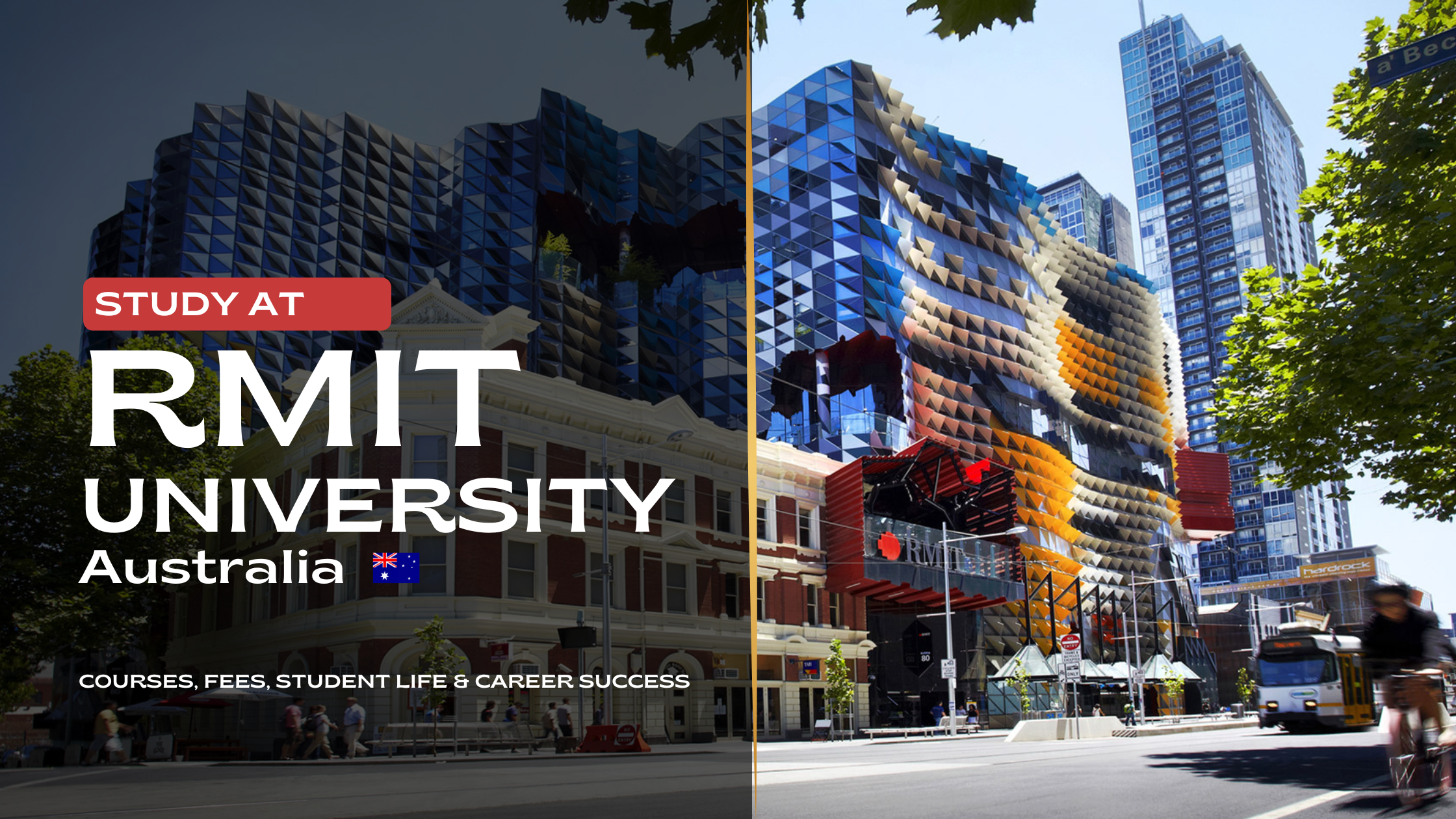
RMIT’s main campus in Melbourne CBD places you in the heart of Australia’s cultural and economic centre, with access to:
- State-of-the-art labs and studios
- Modern libraries and study hubs
- Innovation and tech spaces
- Student lounges and cafes
The vibe is busy, creative, and connected—ideal for students who enjoy an active city life.
Student Life & Support Services
RMIT provides strong student support, including:
- Academic support and tutoring
- Career advice and job placement services
- Mental health and well-being support
- Clubs, societies, and student events
No matter your interests, there’s a community for you at RMIT.
Career Opportunities & Industry Linkages
One of the biggest reasons international students choose RMIT is employability. Strong industry ties mean:
- Internships and placements with real companies
- Industry projects as part of coursework
- Career fairs and employer networking events
These connections help RMIT graduates enter the workforce with confidence—often even before graduation.
Conclusion: Should You Study at RMIT University?
If you want a future-focused education closely linked to real jobs and industry needs, RMIT University is absolutely worth considering.
What makes RMIT special:
- Practical and hands-on learning
- Strong industry connections
- Central Melbourne location
- Global recognition and rankings
- Supportive student services
Studying at RMIT isn’t just about earning a degree—it’s about building a career. If you’re ready to invest in your future with practical skills and global opportunities, RMIT might be the perfect fit.
FAQs
Is RMIT University good for international students?
Yes! RMIT is highly respected globally and provides excellent support, internships, and career services for international students.
What is RMIT best known for?
RMIT is especially strong in technology, design, business, engineering, and art programs.
How expensive is tuition at RMIT?
Tuition generally ranges between AUD 30,000 and 45,000 per year, depending on the course, with scholarships available.
Can international students work while studying at RMIT?
Yes—student visa holders can work up to 48 hours per fortnight during study periods.
What city is RMIT located in?
RMIT’s principal campus is located in Melbourne, Victoria, Australia.